Your chair is doing more damage than your monitor, your keyboard, and your terrible posture combined. Architects treat seating as an afterthought while obsessing over GPU benchmarks and RAM specs, and that priority order is backwards. You'll spend more hours in contact with your chair this year than you will with your laptop, your partner, or possibly your own bed.
Updated 13 min read
Best Chairs for Architects Who Sit at a Desk 10 Hours a Day
Free Lessons
Watch real ArchAdemia lessons, free
Free Lessons
Watch real ArchAdemia lessons, free
11 full lessons from paid courses — no account needed
Watch a free lessonThe Verdict: What's Actually Worth Buying
The best chair for architects in 2026 is the Herman Miller Aeron (£1,395), built around PostureFit SX lumbar support and an 8Z Pellicle mesh seat engineered for 10+ hour workdays. If the price makes your eyes water — reasonably — the Steelcase Series 1 (£450) is the best value pick, matching the Aeron's 12-year warranty at roughly a third of the cost.
This is a spend-once category, and I mean that literally. Architects sit longer than almost any other profession outside air traffic control and long-haul aviation. During production weeks, an 8-10 hour seated day isn't the exception, it's the baseline. Yet most of us buy laptops like we're outfitting a small nation's defence budget and then sit on whatever chair was already in the flat when we moved in.
The reasoning that follows isn't about brand prestige. Lumbar support, seat depth adjustment, and armrest positioning matter more than the logo on the backrest. A £1,395 chair with the wrong seat depth for your leg length will hurt you faster than a £300 chair that actually fits. Get the fit right first, then worry about the badge.
Here's the uncomfortable maths: a bad chair is a hidden tax on your fee. RSI, lower back pain, and the neck strain that comes from hunching over a monitor checking line weights all cost billable hours — hours you don't invoice for because you're standing up every twenty minutes trying to un-cramp your spine.
Why Architects Wreck Their Backs Faster Than Most Desk Workers
Architects in production phases sit for 8-10 hours a day, comfortably outpacing the UK average office worker's 6.5 hours. That's not a minor gap — it's an extra 1.5 to 3.5 hours of seated load, every single working day, for weeks at a time during deadline crunches.
The postural problem is specific to what we do, not just how long we do it. You lean forward to check line weights against a monitor that's slightly too far away. You hunch over tracing paper or a tablet at an angle no ergonomist would ever sign off on. You twist sideways to grab a material sample or flick through a spec book without moving your chair. None of these movements are dramatic on their own. Repeated for ten hours a day across a six-week production run, they add up to a spine that hates you.
Site visits and model-making days are actually fine — you're moving, your weight shifts, your body isn't locked into one position for hours. The problem is the production crunch: the week before a planning submission, the final push before a Stage 4 issue, the all-nighter energy minus the "all-nighter" because you've got a 9am the next morning. Zero movement, maximum hours. The chair needs to work specifically for that scenario, because that's when it's actually earning its keep.
And here's the bit that makes me laugh every time I walk into a studio: the same architect who agonises over whether to get 32GB or 64GB of RAM is sitting on a £40 chair rescued from a defunct startup's office clearance sale. We'll happily read fourteen laptop reviews before committing to a Ultrabook, and then sit on furniture with all the ergonomic sophistication of a bar stool.
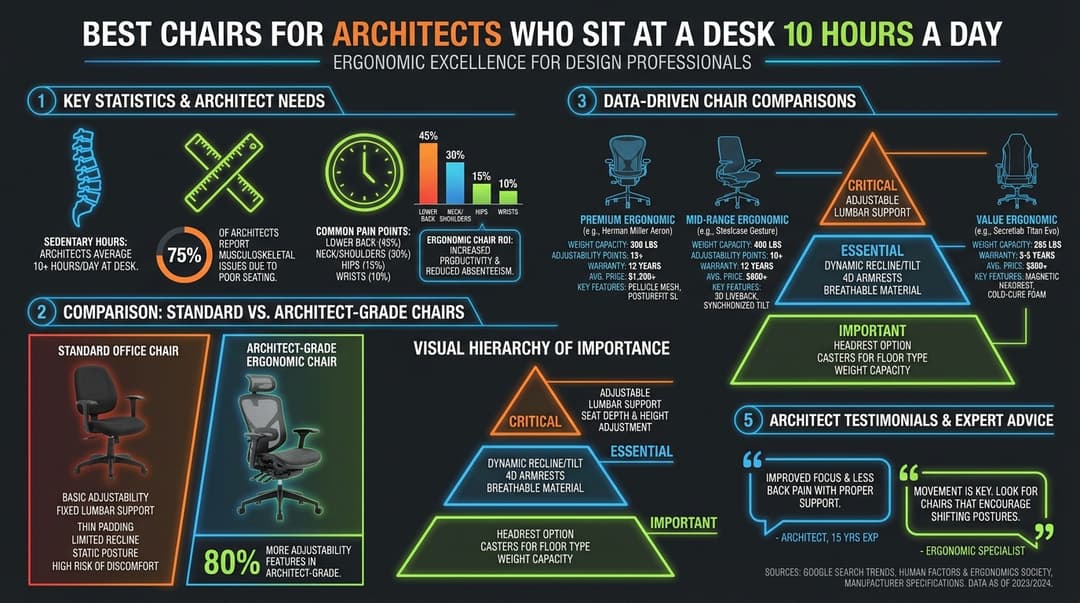
Judge every chair in this article against five criteria: lumbar support, seat depth adjustment, armrest adjustability, breathability, and warranty length. Everything else is marketing.
The Contenders: Full Chair Comparison Table
The best chair for architects overall is the Herman Miller Aeron, but it isn't the only credible option — the right pick depends heavily on your budget and your role. Here's the full comparison.
| Chair | Price (GBP) | Lumbar Support | Weight Capacity | Warranty | Best For |
|---|---|---|---|---|---|
| Herman Miller Aeron | £1,395 | PostureFit SX (adjustable) | 159kg | 12 years | Full-time desk-bound architects |
| Steelcase Series 1 | £450 | Adjustable lumbar + LiveBack | 150kg | 12 years | Junior architects, budget studios |
| Herman Miller Sayl | £745 | Fixed-flex Y-Tower support | 136kg | 12 years | Archviz artists, multi-monitor setups |
| Secretlab Titan Evo | £459 | Built-in lumbar (foam) | 130kg | 5 years | Gaming — not recommended for CAD |
| IKEA Markus | £229 | Mesh back curve (fixed) | 110kg | 10 years | Students, first flat/studio setups |
| Autonomous ErgoChair Pro | £339 | Adjustable lumbar + headrest | 136kg | 2 years (extendable) | Taller students, home offices |
Two flags worth raising. The Secretlab Titan Evo is overrated for architects specifically — it's a genuinely well-built chair, but it's built for reclined gaming posture, not the upright, forward-leaning position you hold while checking render passes or line weights for ten hours. The IKEA Markus is underrated. At £229 it punches well above its price point for lumbar curve and breathability, and I've seen more of them survive four years of architecture school abuse than I'd have predicted.
Herman Miller Aeron: The One Everyone Recommends (Rightly)
The Herman Miller Aeron earns its reputation as the best chair for architects doing sustained CAD and BIM work, and the reason is simple: it's the only chair in this list engineered specifically around the idea that someone might sit in it for a full working day, five days a week, for a decade.
What's genuinely good: the PostureFit SX lumbar system supports your sacrum, not just your lower back — a small distinction that matters enormously after hour six. The 8Z Pellicle mesh seat is the most breathable material in this comparison by a distance, which matters more than people expect in a studio with bad air conditioning and a deadline. It comes in three sizes (A, B, C), meaning a 5'2" architect and a 6'4" architect can both get a genuinely correct fit rather than a compromise. And the 12-year warranty tells you everything about how long Herman Miller expects this chair to last — because it does.
What's not so good: £1,395 is a genuine barrier, and I'm not going to pretend otherwise. For a student or a Part 1 on £24k, that's an absurd amount to spend on a chair. The mesh seat, for all its breathability, is slightly less forgiving than foam for very long stationary sessions — some architects find their sit bones need a break after hour eight. And sizing mistakes are common if you buy without trying one first; a size B for someone who needs a size C is a genuinely worse experience than a cheaper chair that fits properly.
Here's the move most people miss: buy secondhand. Since the shift to hybrid working gutted a huge number of corporate offices, Aeron units from decommissioned floors are everywhere — refurbished units go for £400-700, which puts you in Steelcase Series 1 territory for the single best ergonomic chair on the market. Check the pneumatic cylinder and the mesh tension before buying, but otherwise this is one of the smartest purchases an architect can make.
Best for: BIM Managers running multi-model coordination sessions particularly benefit from the Aeron in size B — the adjustable PostureFit SX prevents the lower-back fatigue that creeps in during 6+ hour clash detection sessions, when you're leaning forward into a monitor for long, uninterrupted stretches. Project-Running Architects who are desk-bound long-term should treat this as a career-length investment, not a purchase.
Steelcase Series 1: The Sensible Adult in the Room
The Steelcase Series 1 is the best budget-conscious chair for architects who need genuine ergonomic support without the Aeron's price tag — £450 gets you the same 12-year warranty and a comparable adjustment range.
The LiveBack technology is the standout feature: the backrest flexes and moves with you rather than locking you into one recline angle, which suits the way architects actually move through a working day — leaning in to check a detail, leaning back to think, leaning in again. Adjustable arms and lumbar depth mean you can dial in a decent fit even without the Aeron's three-size system.
Where it falls short: the standard fabric option isn't as breathable as the Aeron's mesh, so if your studio runs warm, this is worth bearing in mind. It also comes in fewer size variants, so very tall or very short architects may find the fit slightly more generic. And I'll be honest — it looks more "corporate call centre" than "design studio." If aesthetics matter to you in a space full of mood boards and material samples, that's a legitimate consideration.
Best for: Junior Architects who need reliability without the flagship spend, and studios furnishing five or ten desks where the Aeron's price multiplied across a whole team simply isn't realistic. If you're the practice owner reading this while eyeing up a bulk order, the Series 1 is the sensible call — better ergonomics per pound than almost anything else on this list.
The Budget and Student Tier: What £150-300 Actually Buys You
The best chair for architecture students in 2026 is the IKEA Markus at £229, offering a genuinely competent mesh lumbar curve and strong resale value that most chairs at this price point simply don't match.
The Markus punches above its price point in a way that surprised me the first time I actually sat in one properly rather than dismissing it as flat-pack furniture. The mesh back has a real lumbar curve built into it — not adjustable, but shaped sensibly for an average frame. It's mesh, so it breathes. It's available at every IKEA in the country, meaning you're never more than a short drive from a replacement part. And when you move out of halls or your third rented flat of the degree, it resells for a genuinely useful chunk of what you paid.
The catches: the armrests are fixed, not adjustable, and there's no seat depth adjustment — if you're notably tall or short, the fit will be a compromise. It also won't survive daily heavy use for a decade the way the Aeron will; expect four to five solid years before the gas lift or castors start complaining.
The Autonomous ErgoChair Pro (£339) is worth considering as a step up, particularly for taller students — it includes an adjustable lumbar system and a headrest, both of which the Markus lacks, and its extended seat pan suits anyone over 6ft who finds the Markus cramped after a few hours.
Straight talk, because someone needs to say it: at architecture school, your desk chair matters less than your all-nighter habit does. No chair fixes the damage of pulling three consecutive nights before a crit. But a £229 Markus beats a £40 desk-chair-shaped object from a house clearance every single time, and the difference compounds across a five-year degree.
Best for: Architecture students in halls or rented rooms who need something that survives 3-4 years of genuine daily use and holds resale value when you inevitably move again.
The Archviz Trap: Why Gaming Chairs Are a Mistake
The best chair for archviz artists is the Herman Miller Sayl at £745 — not a gaming chair, because archviz work demands an upright, forward-leaning colour-checking posture that gaming chairs are specifically not designed to support.
This is worth addressing directly because it's a genuinely common mistake. The Secretlab Titan Evo (£459) is popular with archviz artists, largely because of the crossover culture between rendering and gaming — same monitors, same GPUs, same aesthetic sensibility. But a gaming chair is built around recline. It's designed for a reclined, headrest-supported posture suited to console or PC gaming sessions, with a deep bucket seat that encourages you to lean back.
Archviz work is the opposite. You're leaning forward to check colour accuracy against a reference image, swivelling between a viewport and a reference monitor, adjusting your position constantly as you check materials, lighting, and render passes. A chair built for recline actively works against that posture. You end up perched on the edge of a bucket seat that wasn't designed for it, which defeats the entire purpose of buying an "ergonomic" chair in the first place.
The Herman Miller Sayl is the better call — cheaper than the Aeron, built on the same ergonomic philosophy, with a suspension backrest that supports an upright working posture rather than encouraging you to lean back. If you're refining your V-Ray or Corona workflow across long render-check sessions, worth pairing your new chair setup with a proper look at how you're actually working — our Rhino & V-Ray course covers workflow efficiency that cuts down the hours you're stuck in that chair in the first place.
Best for: Archviz Artists running dual or triple monitor setups who need swivel range and neck support far more than they need recline.
What's Actually on My Desk
Full disclosure: I run a secondhand Aeron, size B, bought refurbished for just under £500 when a nearby office cleared out its floor during the hybrid-work shift. It's the single best purchase I've made for my back in the last five years, and I say that as someone who spent a genuinely embarrassing amount on a gaming chair in my late twenties that I regretted within about four months — my neck and wrists were worse, not better, because I was sitting in a reclined position while leaning forward to check details all day. Classic mismatch between the chair's design intent and what I was actually doing in it.
I also run a sit-stand desk, and the honest truth is that chair choice matters less if you're genuinely alternating between sitting and standing through the day. A great chair used for ten straight hours is still worse for you than a decent chair used for six hours split with two hours of standing. If you can only make one change this year, alternating position beats upgrading your seat.
One maintenance tip that gets ignored constantly: check your gas lift and castors annually. Most "this chair is rubbish now" complaints I hear from people are actually a worn-out gas cylinder slowly sinking through the day, not a fundamental design flaw. A replacement gas lift costs £15-25 and takes ten minutes to fit. Before you write off a chair and buy a new one, check whether it's the chair or just a £20 part that's had it.
The Bottom Line
Buy once, buy properly, and stop treating your chair as an afterthought to your laptop budget. If you can stretch to it, the Herman Miller Aeron — new or refurbished — remains the best chair for architects doing genuine full-time CAD and BIM work, full stop. If £1,395 isn't realistic right now, the Steelcase Series 1 gets you 80% of the ergonomic benefit for a third of the price, and the IKEA Markus is a perfectly respectable place to start if you're still a student working out which corner of the profession you'll end up in.
Whatever you choose, judge it against the same five things: lumbar support, seat depth, armrest adjustability, breathability, and warranty. Everything else is just upholstery.
FAQ
What is the best chair for architects working 10-hour days?
The Herman Miller Aeron (£1,395) is the best chair for architects working sustained 8-10 hour days, due to its PostureFit SX lumbar system and breathable 8Z Pellicle mesh seat rated for full-day use. Buying a refurbished unit for £400-700 delivers the same ergonomic benefit at a much lower price.
Is the Herman Miller Aeron worth the price for architects?
Yes, for architects who sit for 8+ hours a day, the Aeron is worth the price because of its 12-year warranty and adjustable PostureFit SX lumbar support, which directly addresses the forward-leaning posture common in CAD and BIM work. Buying secondhand or refurbished (£400-700) significantly reduces the cost while retaining the same ergonomic benefits.
What's the best budget chair for architecture students?
The IKEA Markus (£229) is the best budget chair for architecture students, offering a shaped mesh lumbar curve and strong resale value across a typical 3-4 year degree. It lacks seat depth adjustment and adjustable armrests, but comfortably outperforms cheaper unbranded office chairs.
Should archviz artists use a gaming chair?
No, gaming chairs are not recommended for archviz artists because they're built for reclined gaming posture rather than the upright, forward-leaning position needed for colour-checking and render review. The Herman Miller Sayl (£745) is a better fit, offering upright ergonomic support suited to multi-monitor archviz workflows.
Is it worth buying a secondhand Herman Miller Aeron?
Yes, buying a secondhand or refurbished Herman Miller Aeron is a legitimate strategy, with used units commonly available for £400-700 following the widespread office downsizing that followed the shift to hybrid work. Check the gas lift and mesh tension before buying, as these are the most common points of wear.
How many hours a day do architects actually spend sitting?
Architects in production phases typically sit for 8-10 hours a day, notably higher than the UK average office worker's 6.5 hours. This concentrated seated time, especially during deadline crunches, is the main reason ergonomic seating matters more in architecture than in many other desk-based professions.
What should architects look for when buying an office chair?
Architects should prioritise five features when buying an office chair: adjustable lumbar support, seat depth adjustment, armrest adjustability, breathable material, and a warranty of at least 5 years. Brand prestige matters far less than whether the chair is correctly sized and adjusted for the individual's body.
Is the Secretlab Titan Evo good for architects?
The Secretlab Titan Evo (£459) is not recommended for architects doing sustained CAD or BIM work, despite its popularity among archviz artists, because it's engineered for reclined gaming posture rather than the upright position needed for detailed screen-based work. Its 5-year warranty is also shorter than comparable ergonomic office chairs like the Steelcase Series 1.

Written by
About the team